
Your project · Lisse
A clear budget starts with clear scope.
The cost follows from the existing building and the agreed work.
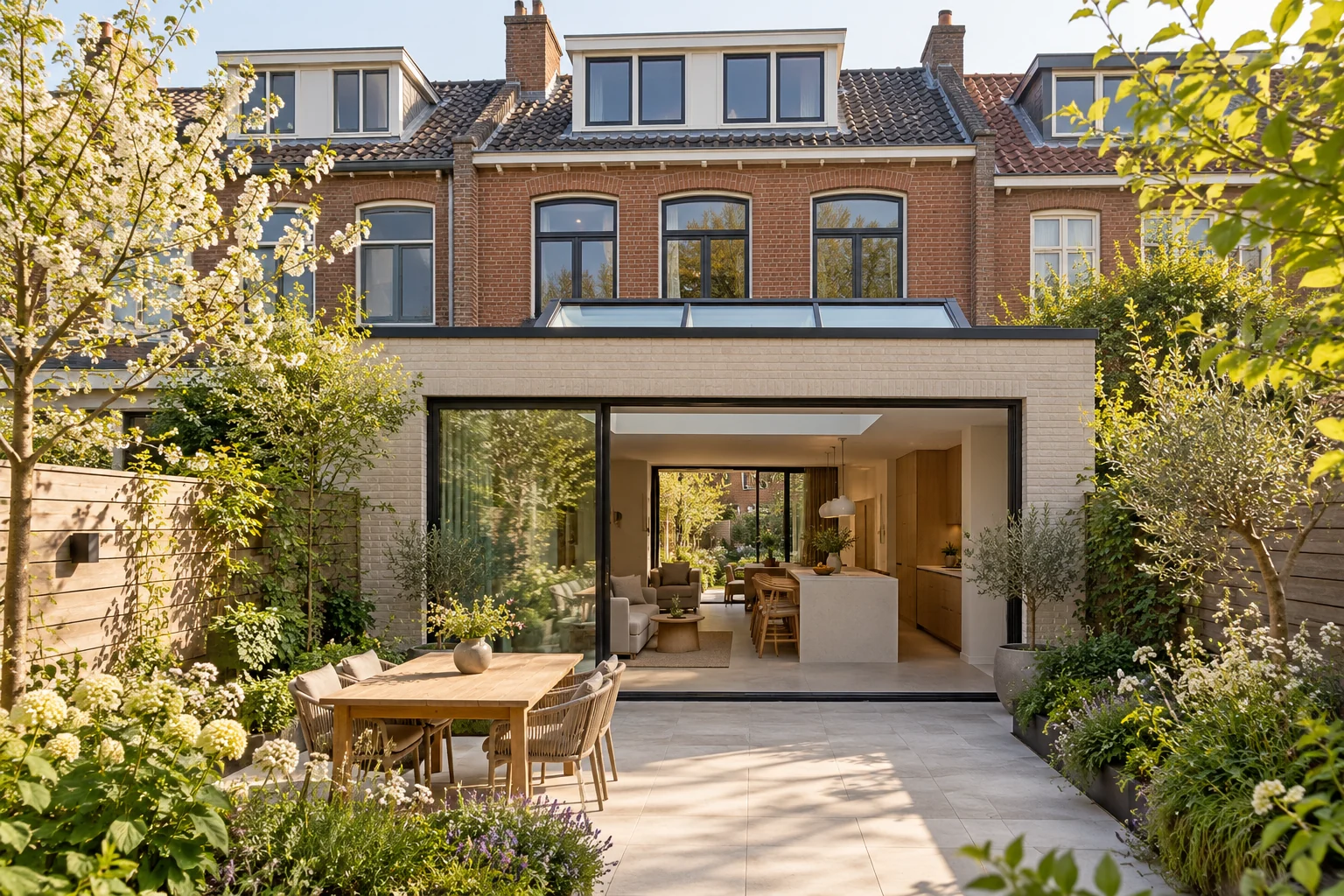
Comfortable now, adaptable later
Compare the complete intervention
Separate necessary work, useful preparation and optional additions. Compare later adaptation costs with the additional investment now, including effects on existing finishes.
Which trade-off matters?
Preparing for every future possibility can unnecessarily increase the budget. Compare simple preparation, such as accessible routes and a considered layout, with provisions that might never be used.
What belongs in the budget?
- Survey, investigations and design preparation.
- Demolition, foundations, structure and new building elements.
- Electrical, water, heating and ventilation work.
- Windows, floors, walls, kitchens and bathrooms.
- Access, protection, scaffolding and waste removal.
- Clearly identified provisional sums and change arrangements.
A starting price needs a defined scope.
Ask for work, materials, VAT, assumptions and provisional sums to be clearly described. Undecided items should remain visible so an early estimate is not mistaken for a fully developed final budget.
Compare the content
Consider preparation, protection, timing and reinstatement alongside the total price.
Read the quote comparison guide