
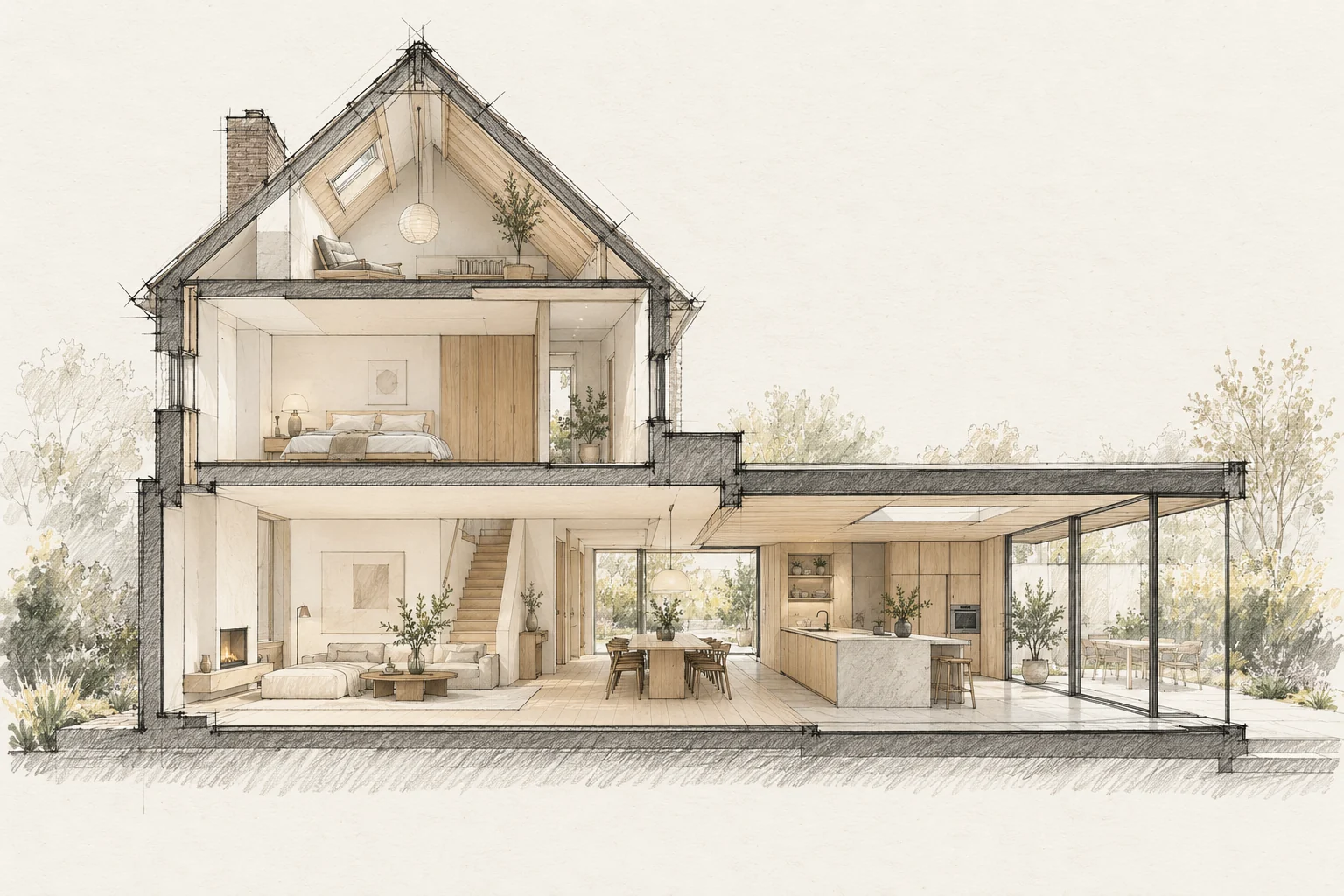
New wishes or unexpected conditions can arise during renovation. Record their effect on cost and time before proceeding.
Compare the complete intervention
Separate necessary work, useful preparation and optional additions. Compare later adaptation costs with the additional investment now, including effects on existing finishes.
Describe the change
State what differs from the agreed scope and why. Use a drawing or photograph where helpful.
Consider all consequences
An added connection can affect pipework and finishes. Discuss delivery, sequencing and any work that is no longer required.
Decide this before construction
Choose the current layout first, then assess targeted preparation for later. Record which provisions are installed now and how they remain identifiable and accessible.
How to review the result
Check the agreed current use fully. Then review preparatory provisions so future options are documented rather than left as a general promise.
A situation to test your plan against
An extra workspace may later become a bedroom. Describe current use and one plausible future scenario for a family renovation. This reveals useful preparation without building for every possible change.
Questions for your own property
- What changed from the original scope?
- What happens to cost and timing?
- Is agreement recorded?
Illustrative design situations, not evidence of completed work. Assess decisions against the actual property.